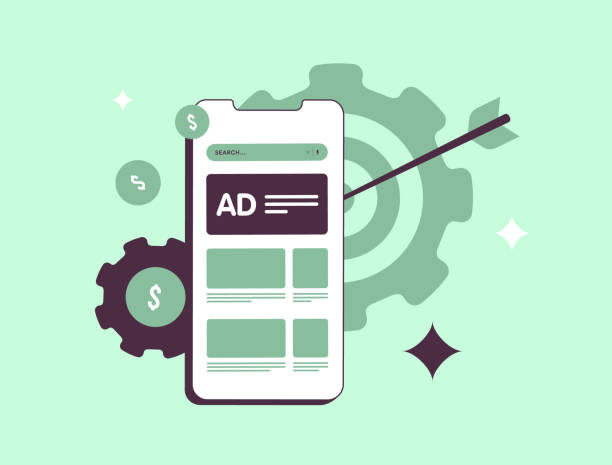
Making the most of advertising budgets is one of the most important issues facing companies, whether they are agile startups or big corporations, in the rapidly growing field of digital marketing. Investing in advertisements is simple. Making those advertisements effective is a completely different matter. Today’s marketer has access to a multitude of platforms, comprehensive analytics, and strong tools. However, having too many options increases the chance of spending on channels that don’t really deliver or distributing expenditures too thinly.
Marketers must adopt a strategic allocation attitude rather than a spending one in order to optimize ad spend and maximize return on investment (ROI). Making every rupee, pound, or euro work harder is the goal, not spending more money on ads. It takes effort to get that degree of efficiency. It calls for a combination of audience comprehension, data analysis, innovative testing, and an ongoing improvement process.
Let’s start by discussing the fundamental idea of return on investment (ROI) in relation to advertising. Return on investment, or ROI, is more than just the amount of money generated by an advertising campaign. It concerns the connection between outcome and expense. On the surface, a campaign that makes ₹10 lakh could appear to be successful, but if it costs ₹9 lakh to run, the margin is slim. However, a smaller campaign that makes ₹2 lakh out of a ₹50,000 investment might yield a more robust return. Therefore, increasing profitability and efficiency as well as revenue is the aim.
Appropriate measurement is the first step in determining the actual impact of every advertising campaign. Due to a lack of appropriate criteria, many companies are unable to maximize their advertising expenditures. Though they don’t provide the complete picture, clicks, impressions, and views can be instructive. More insightful information is provided by conversion metrics including return on ad spend (ROAS), cost per acquisition (CPA), and customer lifetime value (CLTV). Businesses can start to distinguish between advertisements that only bring in traffic and those that actually propel business expansion by monitoring these.
Audience targeting is a feature of advertising that is frequently disregarded. Despite the very accurate target segmentation made possible by digital platforms, many campaigns are still constructed around generic, wide audiences. Your message will be more pertinent and your cost per conversion will be lower if your targeting is more precise. Reaching the appropriate people with the right message at the right moment is significantly more effective than trying to reach as many people as possible. Not only should audience insights guide your target audience, but they should also guide your communication strategy.
Your capacity to evaluate and act upon data determines its quality. Campaigns ought to be segmented according to performance factors, such as time of day, creatives, devices, locations, and demographics. Sometimes, when evaluated through a more granular lens, what appears to be underperformance at a macro level conceals pockets of great success. Campaign efficiency can be significantly increased by discovering those areas and redistributing funds appropriately. For instance, advertisements aimed at people in Tier-1 cities between the ages of 25 and 34 may be yielding exceptional results inside a Facebook campaign that is underperforming overall. Immediate gains can be achieved by refocusing funding on high-performing sectors and halting unproductive ones.
Unexpectedly, creativity has a significant impact on maximizing ad budget. The message, images, and format of your advertisement can all have a big impact on how people react. If the advertisement fails to draw attention or inspire action, even the most well-targeted campaign may be a failure. A/B testing is a technique used by marketers to test various iterations of creative elements to see which ones work best. A minor alteration to the title or image can occasionally result in significant gains in click-through or conversion rates. This innovative improvement has a compounding effect on ROI over time.
Using automation and machine learning techniques is one of the best strategies to maximize spending. The majority of well-known ad networks, such as Google Ads and Meta Ads (Facebook/Instagram), include algorithmic targeting and intelligent bidding techniques. These systems use performance data to continuously modify bids and placements in real-time. Despite their strength, these instruments still need human supervision. If algorithms are not set up correctly, they may optimize for the incorrect objective. Automated campaigns are regularly reviewed to make sure they are in line with corporate goals.
Budget reallocation based on real-time outcomes is another strategy that distinguishes highly effective advertising from mediocre ones. Marketers ought to take a dynamic approach rather than establishing a preset budget and letting it run its course. Budgets ought to be flexible rather than set. Underperforming advertisements should be promptly suspended or modified as new data becomes available, and funds should be reallocated to campaigns or distribution channels that are producing better outcomes. Businesses may adjust to shifting audience behaviors, market trends, or platform changes by being responsive in real-time, which offers them a competitive edge.
Diversification of channels is another important factor. Many companies overlook new channels like LinkedIn, YouTube, programmatic display, and influencer marketing in favor of relying primarily on one or two platforms, usually Google or Facebook. Doubling down on what is effective is a good idea, but relying too much on one channel raises the risk. Marketers can find untapped audiences and lessen their reliance on any one source of traffic by experimenting with new channels on a reduced budget. When used with new tactics and creativity, a platform that was previously neglected can occasionally become a top performer.
The landing page experience should not be disregarded. Ads may be quite effective at drawing in visitors, but they are a waste of money if the landing page isn’t optimized for conversion. A flawless landing page should have a clear, compelling call to action, load rapidly, and align with the ad’s content. It need to be easy to use on mobile devices, intuitive, and created with the user’s journey in mind. Conversion rates can be greatly increased by regularly testing the headlines, graphics, button colors, and form length of landing pages. Additionally, when scaled, even modest increases here increase your overall return on investment.
Looking beyond the first sale is another aspect of long-term ad spend optimization. Getting a client is only the first step. Knowing the long-term benefit allows brands that recognize client lifetime value to spend more up front. Campaign evaluation is altered as a result. A campaign that generates a devoted consumer who makes repeat purchases but breaks even on the initial sale is significantly more lucrative. Here, remarketing and retargeting tactics are crucial. Businesses can boost ROI without starting from scratch by maintaining relationships with current consumers through tailored offers and advertisements.
Attention should also be paid to attribution models. The complete consumer journey is not credited by conventional “last-click” attribution. Before converting, many consumers engage with a variety of advertisements, channels, and content. You risk misjudging whether initiatives or channels are actually causing success if you merely give credit to the last touchpoint. With the use of multi-touch attribution, marketers can allocate resources based on the full conversion process rather than simply the conclusion of it.
Although technology plays a big role in marketing nowadays, humans are still the main focus. Ad spend optimization is more than simply a technical exercise; it’s about knowing your target, communicating with them, providing genuine value, and always refining your delivery. Although platforms and tools will change, the fundamentals won’t. Honor the time of your audience, provide for their demands more effectively than your rivals, and relentlessly monitor your success.
Lastly, what distinguishes successful advertisers from those who squander money and point the finger onto the platform is their attitude of constant testing and learning. Every campaign provides information. Each look, click, and conversion has a backstory. Businesses that approach every campaign as an experiment to learn from, improve, and scale are the most successful. Even the most successful marketers don’t always get it right the first time. Their ability to monitor, evaluate, adjust, and enhance over time is what distinguishes them.
To sum up, increasing expenditure, making a bigger statement, or following trends won’t maximize return on investment or optimize marketing spend. It all comes down to using your resources more wisely. It involves striking a balance between strategy, execution, analysis, and innovation. It’s the art of repeatedly delivering the correct message to the right person at the right moment. It’s also a process rather than a final destination. Any firm can go from wasting money to making the most of every dollar, rupee, or pound it invests if it has the correct attitude, resources, and dedication. Spending, but spending correctly, is where the real power of advertising rests.