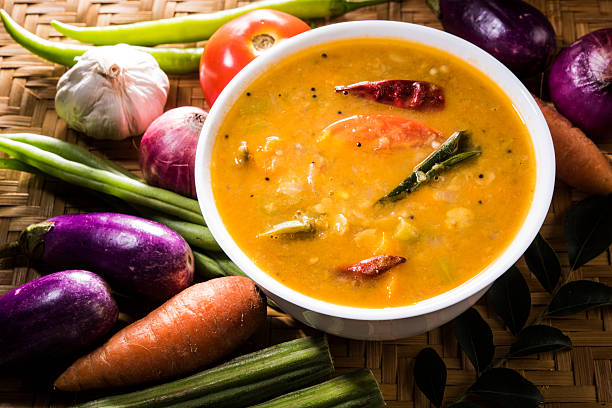
Sambar is more than simply food; it’s a bowl of culture, tradition, and remembrance. It is more than just a lentil-based curry to millions of people in South India and countless others who have discovered its distinct flavor. It’s cozy. It is customary. Together with the sound of a dosa sizzling on a hot tawa or the steam rising from soft idlis heaped in a cooker, the scent wafts from the kitchen in the early morning. In its purest form, preparing sambar at home is a rhythm rather than a sprint. It’s not only about the ingredients; it’s also about how they complement one another, communicate to one another, and make every bite feel warm.
For sambar, there isn’t a single, strict recipe. Every area, every home, and occasionally even every grandma has her own version; they are all as legitimate and have strong roots in regional culture and family customs. Some enjoy it thick and sour, while others want it mild and broth-like. While some people use a variety of veggies, others just use one or two. The spices, lentils, and vegetables are the body that keeps everything together, while the tamarind is the spirit. Sambar’s adaptability and capacity to convey emotion as well as geography are what make it so magical.
Toor dal, or pigeon peas, is the foundation of a wonderful sambar. The basis is made up of these unassuming yellow lentils, which add bulk, protein, and a gentle earthiness that perfectly melds with the intricacy of the spices and the tang of the tamarind. It is essential to prepare the dal thoroughly. To create the smooth background that will let the other tastes to show, it must be cooked until it is soft and creamy, preferably in a pressure cooker. The addition of a drop of oil and a dash of turmeric before cooking facilitates the dal’s breakdown and provides warmth from the beginning.
The second necessary is tamarind. It adds the distinctive tanginess that distinguishes sambar from other lentil meals. The deep, black flavor of tamarind pulp is released by soaking it in warm water and then extracting the juice. After the veggies have simmered and the dal is finished, this juice is usually added to the sambar. It gives character and depth in addition to acidity. It’s always a matter of tasting and adjusting because too much might overshadow the meal while too much can elevate it.
The heart of sambar is vegetables. Okra, carrots, radish, pumpkin, ash gourd, brinjal (eggplant), and drumsticks (moringa) are traditional options. Every vegetable has a distinct flavor; radish adds a hint of pepper; carrots and pumpkins provide sweetness; brinjal adds softness; and drumsticks add a distinct taste and aroma. A medley is used in many homes, adding color and nutrients to the meal. To ensure that the veggies maintain their texture when combined with the dal, they are usually cooked in water with a pinch of salt and turmeric until they are barely soft.
Next up is sambar powder, which is possibly the most closely kept secret in any South Indian cuisine. A basic dal is transformed into sambar by combining roasted lentils, coriander seeds, dried red chilies, fenugreek, and additional spices. There is no mistaking the scent of hot oil and fresh sambar powder. While some purchase it already ground, others grind it in weekly or monthly quantities. The distinction is clear. Sambar powder prepared at home is more fragrant, fresher, and may be tailored to the preferences of the family. Others want it more fragrant, nuttier, or spicy. It’s the one component that may quickly take you to a certain kitchen in a particular house.
The last and maybe most important step in the sambar journey, tempering, often referred to as “tadka” or “thaalippu,” is when the process of putting everything together starts. Heat a teaspoon of oil or ghee, let mustard seeds crackle, and then add fresh curry leaves, dried red chilies, and a pinch of asafoetida. For a sweeter, more complex flavor, some people sometimes add chopped onions or shallots. The dish comes to life in the most dramatic and delectable way when the tempering is poured over the cooked dal, tamarind-infused veggies, and sambar powder mixture.
It’s important to be consistent. While some prefer their sambar thin so it seeps into their rice, others like it thick enough to cover the back of a spoon. A good sambar always has a balance, a sort of culinary equilibrium between the salty, sweet, sour, and spicy flavors, regardless of personal preference. A tiny bit of jaggery helps smooth the edges of the tamarind and chili and even out the flavors. The last addition of fresh coriander leaves adds brightness and a hint of herbal sweetness.
Making sambar is crucial, but so is serving it. Poured liberally and soaking the dish, it may be served with crispy dosas or steaming hot idlis in Tamil Nadu. It is a popular accompaniment to plain rice in Andhra Pradesh and Karnataka, frequently served with a side of pickle or papad and a dab of ghee. It is served with avial, thoran, and pachadi at Kerala’s elaborate vegetarian feast, known as Sadya. It should be consumed carefully, relished with every bite, and valued not only for its flavor but also for its texture and scent, regardless of how it is prepared.
Sambar’s leftovers are another aspect of its allure. Overnight, the flavors intensify, adding to the enjoyment of the bowl the following day. Many people swear by leftover sambar as a tasty soup on a wet night or as the ideal base for upma. It’s the type of food that never loses its essence, only slightly altering with each reheating.
Making sambar from scratch is an act of love and preservation in a time when many kitchens are dominated by pre-made mixes and fast meals. It introduces you to a centuries-old and multi-community culinary tradition. It evokes the slow, methodical rhythms of a grandmother in her kitchen, pulverizing her own spices, using practiced fingers to check the tamarind, and instinctively adjusting the salt. It’s one of those foods that feeds memory, culture, and spirit in addition to the body.
Even people who are not from the South Indian community have embraced sambar and come to value its warmth and richness. It’s a dish that introduces guests to a wide range of Southern concepts and flavors. Even if it’s just for an afternoon, making it at home entails engaging with that world.
Sambar does not necessarily need to be prepared in a traditional manner in order to be considered authentic. People have learned to try new things while still honoring the original recipe over time. For a Kerala-style variant, some people add coconut. For a thicker version, some people mix the dal with cooked veggies. For a deeper finish, some people temper with ghee or add green chilies in place of dried ones. It adjusts to taste, location, and availability exactly like humans do, which is part of its allure.
The warmth it provides, however, has not changed. Sitting down with a bowl of hot sambar and rice and watching the tamarind-tinted lentils pool into soft white grains while inhaling the aroma of curry leaves and mustard seeds is incredibly fulfilling. It’s not just a dinner. It’s a ladle of heritage.
For people who are not familiar with the procedure, making sambar at home may initially appear like a tedious undertaking. However, if you’ve tasted it—really tasted it—you’ll want to go back to it repeatedly. In contrast to spice and heat, it asks you to calm down, appreciate, and connect with something deeper, older, and more nutritious.
Sambar begs you to stop in a world that is spinning quickly. to slowly stir. To taste, to smell, to recall. You get closer to the heart of the South Indian kitchen—warm, giving, and incredibly comforting—by doing this.