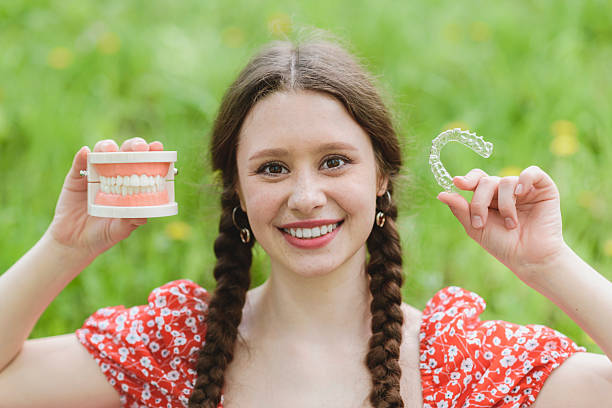
Few topics in the field of teeth straightening are as extensively discussed, hotly contested, and carefully thought out as the decision between Invisalign and traditional braces. It’s a choice that affects lifestyle, comfort, confidence, and even long-term oral health in addition to appearance. The question always seems to boil down to this: is Invisalign better than braces, regardless of whether it’s adults attempting to strike a balance between aesthetics and dental necessity or teenagers anxious about school photos?
Like most questions in life, the answer isn’t a straightforward yes or no. In addition to your dental health, the answer is influenced by your personality, routine, habits, and long-term commitments. To make an informed choice, it is crucial to comprehend the fundamental features of both traditional braces and Invisalign.
A relatively newcomer to the orthodontics field, Invisalign provides a sleek, contemporary method of straightening teeth. It progressively moves your teeth into the ideal position using a series of translucent plastic aligners that are specially created for you. One of the main reasons these aligners have become so popular, especially among adults, is because they are essentially invisible. In social or professional settings where metal braces could be viewed as unattractive or inconvenient, the thought of discretely improving one’s smile is alluring.
Conversely, traditional braces have been around for decades and are very successful. They are made up of metal brackets that are adhered to your teeth and joined by wires that your orthodontist will frequently alter. When it comes to complicated dental problems, braces are especially effective because of this method, which enables constant and accurate pressure. Rotated teeth, overbites, underbites, and other serious alignment issues frequently call for the strength and control that braces provide.
The fact that Invisalign is removable is one of its main benefits. When brushing, flossing, or eating, the aligners can be removed. In contrast to braces, where food can become lodged between the brackets and wires, frequently resulting in plaque accumulation and possible deterioration if not adequately cleaned, this makes maintaining dental hygiene much simpler. As long as you take off your aligners before eating, you can enjoy the crunchy apples, popcorn, sticky candies, and chewy bread rolls that are typically off-limits to those with braces. With Invisalign, there’s no need to avoid these items either.
This removability, however, has advantages as well as possible disadvantages. The discipline needed to maintain Invisalign aligners in position is significant because they must be worn for 20 to 22 hours every day in order to be effective. Removing them too often or forgetting to replace them after meals can impede development or even reverse some of the correction. In this way, Invisalign requires a significant amount of dedication. This could be difficult for teenagers or anyone who is prone to forgetting.
In contrast, once braces are put on, they cannot be taken off. In terms of wear-time discipline, they are a more reliable and maintenance-free option because they operate around the clock. They are constantly there and operate without you having to remember to put them in. Busy folks who don’t want to spend their days worrying about their teeth may find that to be a relief.
Comfort is another factor to take into account. Smooth plastic is used to make Invisalign aligners, which are typically kinder to the mouth. A typical issue with traditional braces is that they include sharp brackets and wires that can stab the lips or cheeks. Although there is some discomfort associated with both Invisalign and braces, especially in the early days following a new tray or wire tightening, most users say that after a brief period of adjustment, Invisalign feels less intrusive and more natural.
One of the most important determining variables is frequently appearance. As the name implies, Invisalign is almost invisible. The majority of people won’t even know you’re wearing them, particularly if you’re talking to someone closely. No more feeling self-conscious during social events or presentations—this is a game-changer for a lot of individuals. Even with brackets that are tooth-colored or made of ceramic, braces are still visible. Others may feel more self-aware, although some brace wearers—particularly younger teens—accept them as a rite of passage or even adorn them with vibrant bands.
Although it differs between the two approaches, the length of treatment is largely determined by how complicated the situation is. Invisalign frequently produces results in the same amount of time as traditional braces, if not less, for mild to moderate alignment problems. However, braces tend to be more successful and may ultimately reduce the overall treatment duration when used for more serious orthodontic difficulties, including as big gaps, major crowding, or sophisticated bite corrections, even though they seem cumbersome.
Another consideration in the decision-making process is cost. In the past, Invisalign was more expensive than braces. However, the price difference has decreased as Invisalign has gained popularity. Both procedures are now reasonably priced in many places, however Invisalign may still be a little more expensive based on the number of aligners you require and the frequency of modifications. Although most dental insurance policies cover both to some degree, it’s a good idea to double check the specifics in advance.
Traditional braces allow the dentist to have more hands-on control over orthodontics. Your orthodontist can make extremely precise adjustments to individual teeth because they are manually modified, something that aligners can’t always do. This becomes particularly crucial in complicated cases that necessitate for molar rotation, vertical tooth movement, or skeletal jaw correction.
On the other hand, Invisalign has advanced significantly in terms of technology in recent years. The range of cases that Invisalign can treat has significantly increased with the aid of 3D imaging, personalized treatment plans, and increasingly sophisticated tray designs. These days, several orthodontists employ hybrid treatments, beginning with braces to manage more challenging movements and switching to Invisalign to complete the procedure more comfortably and flexibly.
Lifestyle factors are also taken into account. Braces may increase your risk of harm or damage from an impact if you participate in contact sports. Because Invisalign is removable, athletes can use it more conveniently and safely by taking it out during sports and replacing it with a mouthguard. Conversely, if you have a tendency to lose items, you may find yourself looking for your aligners all the time or inadvertently discarding them after eating.
The issue of follow-up visits is another. While Invisalign users may receive multiple trays at once and see the orthodontist less frequently, braces usually require adjustments more regularly—roughly once a month. This can help those who have hectic schedules or limited access to routine dental care.
The psychological component comes next. Because Invisalign doesn’t feel like an accessory for teenagers, it frequently appeals to adults. Knowing that you may enhance your smile without completely altering your appearance brings a certain peace of mind. Even though they are increasingly commonplace now, braces still have some connotations that some people find uncomfortable after they are teenagers. Nevertheless, a lot of individuals wear braces with assurance, particularly when they are certain that the outcome will be worthwhile.
Braces and Invisalign can both significantly enhance dental health. In addition to being more aesthetically pleasing, straighter teeth are also easier to maintain, less likely to retain food, and overall better for gum health. Additionally, migraines, uneven enamel degradation, and jaw pain can all be lessened with proper alignment. In this view, selecting either treatment—regardless of the approach—is a positive move.
The most crucial thing is to avoid making decisions only on the basis of convenience, style, or attractiveness. The optimal therapy for your unique needs will be determined after a thorough consultation with a skilled orthodontist. Since no two mouths are same, what works for one individual may not work as well for another.
In the end, if the user is disciplined, Invisalign provides a smooth, contemporary, and flexible route to straighter teeth with the benefits of comfort and privacy. Braces provide unparalleled accuracy and dependability for complicated cases, although being more noticeable and perhaps more physically taxing. Neither is always “better”; both has advantages and disadvantages that should be considered in light of your unique situation.
The true triumph is the smile you get at the end, one that is healthier, brighter, and more self-assured than before, regardless of whether you choose the almost undetectable path or go for the conventional metal.