Anyone who has ever tried painting a room knows that it takes more than just a brush and paint can to accomplish it well, even if it may appear like one of the easiest do-it-yourself projects. Professionals make things appear simple, but their outcomes are the result of expertise, meticulous attention to detail, and a deep understanding of the process. If you approach the process with attention, patience, and the proper preparation, you can still produce results on par with those of an expert, even if you haven’t spent years honing your art.
The basis of a superb paint job starts long before the first stroke, even before you open a paint can. Expert painters are aware of how important preparation is. One of the biggest mistakes individuals do is to rush or neglect the prep work, even though it’s easy to jump right in, especially if you’re thrilled about changing your area. The secret to attaining that perfect finish you see in showrooms or magazines is a clean, smooth, and well-prepped surface.
Emptying the room as much as you can is the first step. It helps to move furniture to the center and cover it with plastic sheets or drop cloths, but if at all possible, move it out of the way. This lowers the possibility of accidents and gives you more freedom of movement. Take off curtain rods, outlet covers, switch plates, and anything else that could obstruct the path or inadvertently get paint on it. Put them in bags with labels so you can quickly replace them later and avoid losing the screws.
Although it’s often neglected, wall cleaning is crucial. Paint adhesion can be hampered by dust, hand oils, and even undetectable residues. Professionals frequently use a moist cloth or a mild cleaning solution to clean walls, particularly in bathrooms and kitchens where moisture and grease can accumulate. After cleaning, look for nail holes, cracks, or dents. If these flaws are not fixed, they will become considerably more noticeable after painting. Small holes respond well to spackling paste, and it’s important to sand them smooth once it dries. Prior to applying the first layer, you want the surface to be level and uniform.
If you have a steady hand, tape might not seem required, but painter’s tape is a secret weapon for that clean, polished edge between walls, ceilings, or trim. Applying it correctly is crucial, though; use a putty knife to firmly push it down to seal the edges and prevent seepage. Additionally, to avoid causing the fresh paint and tape to peel, remove it as soon as possible after painting, not days later.
Professionals also don’t cut corners when it comes to tool selection. Cheap brushes and rollers may seem like a wonderful way to save money, but they can leave uneven textures or shed bristles. While a premium roller with the right nap length (based on wall texture) guarantees clean coverage, a high-quality angled brush is best for cutting in around edges and corners. For higher walls or ceilings, don’t forget to use a solid extension pole; it will save your back and keep your strokes even.
Not every brand or finish is made equally when it comes to paint. Paints of higher quality typically require fewer layers, cover better, and last longer. Which finish—matte, eggshell, satin, semi-gloss, or gloss—is best for a given room depends on its intended use and aesthetic. Flat finishes are more appropriate for low-traffic areas like bedrooms since they conceal flaws better but are harder to clean. Kitchens, bathrooms, and children’s rooms are preferable places for satin or semi-gloss since they are more resilient.
Let’s go on to the method. Always “cut in” the edges first, which entails using a brush to paint the baseboards, corners, ceiling, and trim before using the roller. In order to allow the roller to fill in vast areas without running into edges, professionals do this to create a border. It takes patience and time to cut in, but this is where dexterity counts. Clean, straight lines that give the entire space a polished appearance can be achieved with a steady hand and good brush control.
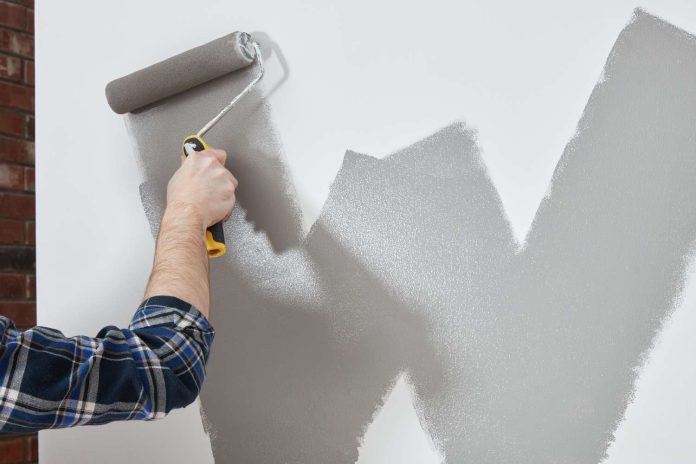
To guarantee uniform color and consistency, especially if the paint has been sitting for some time, thoroughly stir it. Avoid packing a roller with too much paint, since this can result in uneven application and drips. To properly disperse the paint, it’s a good idea to dip it about one-third of the way into the tray and then roll it back and forth multiple times. Without raising the roller too much, begin by filling in the wall in a “W” or “M” pattern. By doing this, patchy regions and obvious lines are avoided and uniform coverage is guaranteed.
Maintain a moist edge by working in parts and preventing regions from drying up before the subsequent roller stroke crosses over them. In the final product, dry edges may show up as lines or streaks. In order to notice any missed spots before they set, professionals are meticulous and constantly aware of how the paint is drying and how light is hitting the wall. Avoid rushing; a steady, even pace with frequent pauses to review your work is much more effective.
Before determining whether a second coat is necessary, let the first coat completely dry. Some high-quality paints make the promise that they are one-coat, but in practice, two coats usually work best, especially when painting over a deeper hue. It’s best to exercise patience while applying a second coat because doing so before the first is fully dry can result in peeling or stains. Look for any minor flaws in between applications; dust or little lumps can be carefully sanded away to achieve a buttery smooth surface.
Painting a ceiling can significantly revitalize a space, especially if it has yellowed with time. Ceilings are frequently overlooked or treated as an afterthought. To prevent light glare and give the impression that the space is larger and brighter, paint the ceilings flat white. It’s usually advisable to paint the ceiling first when painting walls a vivid color to prevent drips onto newly painted walls later.
When it comes to trim and molding, experts truly shine. These sections need a steady touch and are usually painted in a separate finish, usually gloss or semi-gloss. To protect the wall, use painter’s tape; if you’re comfortable working freehand, use it. Brush marks can be removed with light sanding in between coats, and sharp lines can be maintained with a smaller, better brush.
After every coat has dried, take a step back and assess the space in various lighting scenarios. Under warm artificial light at night, something that appears perfect in natural light may have defects. Touch-ups are common and expected; even pros make last-minute edits with a detail brush. Spend some time cleaning up your area, replacing switch plates and fittings, and carefully removing painter’s tape. If you intend to reuse brushes and rollers, wash them right away; if not, dispose of them appropriately. The impression of the makeover is increased when a freshly painted room is left neat and organized.
However, the attention to detail and pride in every step—not simply the wall’s ultimate color—is what really distinguishes a professional-caliber paint job. It’s the even finish, the attention to edges, and the uniform reflection of light on various surfaces. It lies in the preparation, the equipment, the methods, and the attitude of treating the area with decency and artistry. While anyone can paint a wall, a professional painter approaches the process with just as much thought as they do the finished product.
Additionally, there is a psychological benefit to doing it oneself. Few other undertakings may give you a sense of connection to your home like witnessing a room change from drab or obsolete to new and inspiring. It gives you confidence in your capacity to influence the world around you as well as in your painting skills. Furthermore, even though there will always be a few little flaws here and there, the gratification of knowing that you completed the task expertly is more long-lasting than any hastily completed paint job.
Therefore, keep in mind that you can definitely obtain professional results with the correct preparation, tools, skill, and mindset the next time you’re looking at a blank wall and debating whether to hire a painter or do it yourself. Although it can take a little longer and try your patience, the reward—a gorgeously finished space and the satisfaction of doing it yourself—will make every paint job worthwhile.