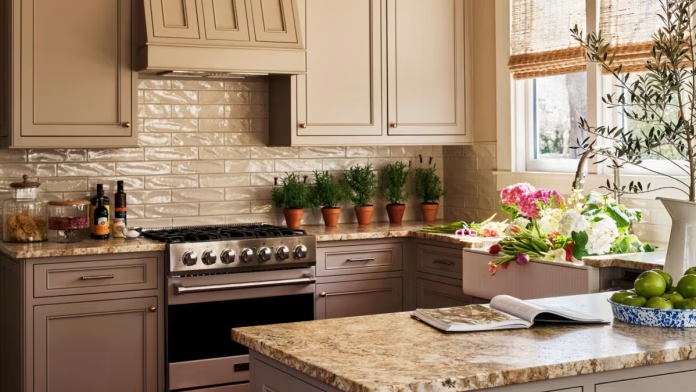
For many years, the kitchen has been regarded as the center of the house. It’s where family moments take place, meals are prepared, and discussions are held. Your kitchen determines how you feel about your house, regardless of whether you’re an avid home cook or just someone who likes to sip coffee by the window. Therefore, generating immediate appeal that appeals to both visual charm and daily utility is just as important as functionality when it comes to redesigning this core area.
A kitchen remodel has an immediate and long-lasting effect, unlike other home improvements that might not be observed by visitors or hardly change your daily routine. Everything from the lighting to the arrangement can alter how you use the room. The room’s flow, the way natural light is used, and how welcoming the space becomes are more appealing than new appliances or gleaming worktops. Additionally, kitchens are frequently deal-makers for people looking at resale value. Kitchens stick in the minds of buyers, and a stunning kitchen may turn a hesitant buyer into an enthusiastic one.
Color is the starting point for one of the most straightforward yet effective changes. Even the most worn-out kitchens may be revitalized with a new coat of paint. Color has the ability to change perception and mood, regardless of your preference for deep earthy tones, melancholy blues, or sharp whites. Darker hues, when utilized properly, can offer depth and drama, while lighter tones provide a sense of cleanliness and space. Additionally, cabinets can be painted rather than replaced, which is an inexpensive alternative that produces a striking visual transformation. Matte finishes, which offer a hint of modern elegance without being overly glossy, are growing in popularity.
In addition to color, lighting is essential for enhancing appeal. Too many kitchens just have overhead lighting, which frequently creates harsh shadows and doesn’t highlight the greatest aspects of the room. Ambience can be immediately improved by adding layered lighting, such as pendant lights over islands, ceiling fixtures, under-cabinet lighting, and even toe-kick lighting. The kitchen may be transformed into a chic focal point with the addition of a statement light fixture, such as a contemporary pendant or chandelier. Better lighting improves functionality in addition to aesthetics, making cleanup and meal preparation safer and simpler.
Another important component that can completely change a kitchen’s tone is the flooring. Upgrading your flooring can significantly alter how it feels to walk on and how it looks if you’re still using worn-out vinyl or broken tiles. Hardwood flooring are still classic, but luxury vinyl planks and engineered wood are more resilient to water damage and provide greater durability in high-traffic areas. In kitchens that prefer a bolder style, patterned tiles have also returned, adding character and charm. Sometimes the appearance of existing tiles can be significantly improved by simply re-grouting and sealing them.
Storage frequently makes the difference between a messy kitchen and one that feels roomy and inviting. As much as it is about adding beauty, increasing appeal can also be about concealing clutter. Once thought to be dangerous because of the upkeep involved, open shelves can be used effectively when used sparingly, such as to showcase cookbooks, pottery, or well arranged jars. Conversely, hidden storage options like appliance garages, pull-out pantry drawers, and corner cabinet solutions assist make the most of available space while maintaining a clean and clear counter. Not only is integrated storage practical, but it also improves appearance.
One of the kitchen’s most noticeable surfaces, countertops are important for both functionality and aesthetics. You may quickly update the area by replacing outdated laminate with butcher block, granite, or quartz. Modern kitchens are now known for their waterfall edges, which provide a sleek and opulent finish when the counter runs vertically down the island’s sides. Although stone surfaces are more expensive, they are a wise investment because of their long-term beauty and durability.
Another possibility for immediate transformation is provided by cabinetry, which is frequently the kitchen’s largest visual element. Although complete replacements might be expensive, a noticeable upgrade can be achieved by refinishing, refacing, or even altering the hardware. Heavy wood blocks can be broken up and the space can feel lighter by replacing typical doors with glass inserts or open cubbies. Two-toned cabinetry—upper and lower cabinets in different colors—creates visual interest and might give the impression that a kitchen was custom-designed for individuals looking for something a little different.
One of the quickest ways to update a kitchen is to update the backsplash, which has both practical and decorative purposes. Modern materials like metallic tiles, textured ceramics, and even mirrored finishes provide flair, even though traditional subway tile is still popular. Without overpowering the space, geometric designs and striking color contrasts can evoke an artistic feeling. Peel-and-stick backsplash solutions have significantly improved and now offer fashionable, short-term substitutes that nonetheless have a high-end feel if a complete tile job is out of your price range.
The multipurpose island is becoming a more and more common component to contemporary kitchens. Islands are now used as dining areas, kitchen stations, and gathering places rather than just more counter space. A built-in sink or stove transforms the island into a true workhorse, while the addition of bar stools immediately encourages discussion and informal eating. Islands can be built with built-in wine racks, open shelves for cookbooks, or even second dishwashers, depending on the amount of room available. Particularly in small areas, even a tiny movable island can add more versatility to a kitchen.
Even though they are usually more costly, appliance upgrades have an immediate functional and aesthetic impact. Although black stainless and even matte white appliances have made a name for themselves among consumers seeking something a little different, stainless steel still dominates due to its polished appearance and longevity. Voice-activated and smartphone-controlled smart appliances provide convenience that is rapidly moving from being a luxury to a need. Modern kitchen design today effortlessly integrates technology, from ovens that can be remotely prepared to freezers that keep track of grocery lists.
Not to be overlooked are the little things that add a great deal to overall charm but are sometimes overlooked. The area can be subtly but effectively refreshed by installing a farmhouse sink, replacing outdated cabinet handles with contemporary brass or matte black hardware, or simply adding new window coverings. Cohesion may be improved and a more polished, deliberate appearance can be achieved even by changing electrical outlet covers and switches to fit the design.
Warmth and texture are great additions for anyone who enjoy a homey, lived-in feel. Warm-toned furnishings, linen curtains, woven bar stools, and wooden accents counterbalance slick surfaces and prevent the room from looking clinical. Additionally, plants add vitality to the kitchen. Greenery softens the room and brings a bit of nature, whether it’s a tall fiddle-leaf fig in a corner, a hanging pothos, or a potted herb garden on the ledge.
Open-plan kitchens that blend into living or dining spaces offer advantages as well as disadvantages. Using comparable color schemes, flooring, or lighting fixtures helps preserve a feeling of oneness between connected rooms, which is why visual coherence becomes crucial. Zoning, however, can be used to discreetly delineate spaces without interfering with movement, for example, by using carpets, islands, or different lighting. With careful planning, combining the kitchen and dining areas in smaller homes can create a more spacious and cohesive living environment.
Another component that improves a kitchen is natural light. Consider installing a skylight or a larger window if your kitchen feels cramped or dark, or swap out heavy drapes for light-filtering blinds. Even placing a mirror across from a window can increase light reflection and give the impression that the space is larger. A kitchen feels more welcoming and each design element pops when it is brighter.
Remodeling doesn’t always have to be a physical process. Decluttering or rearranging your layout might be quite beneficial. The functionality of the kitchen can be improved by rearranging cupboards to accommodate more sensible item placement, setting up a coffee nook, or designating a specific area for food preparation. Even when nothing structural has changed, open counters and simpler surfaces frequently appear to be enhancements.
In the end, the way a kitchen redesign affects people’s emotions is more important than merely aesthetic improvements. A lovely kitchen should be easy to use, cozy, and inviting. Soft light and the aroma of brewing coffee should entice you in the morning, and while you’re cooking dinner in the evening, it should encourage your creativity. Whether you’re cooking for one person or entertaining, the area should easily adapt to your needs and add a touch of beauty to ordinary occasions.
Remodeled homes that are a reflection of the needs and personalities of the occupants are the most successful. They strike a mix between nostalgic aspects and modern features, as well as timeless design and personal touches. It’s the grandmother’s framed recipes over the stove, the happy color, and the sitting arrangement that promotes social interaction. Even though they are frequently minor, these nuances are what make a kitchen the heart of the house rather than simply another room.
Reselling value and design trends aren’t the only factors to consider when redesigning a kitchen. Enhancing a venue that is involved in so many life events is the goal. A kitchen that seems immediately appealing, incredibly useful, and distinctively yours is completely achievable with careful selection, close attention to detail, and a clear vision.